
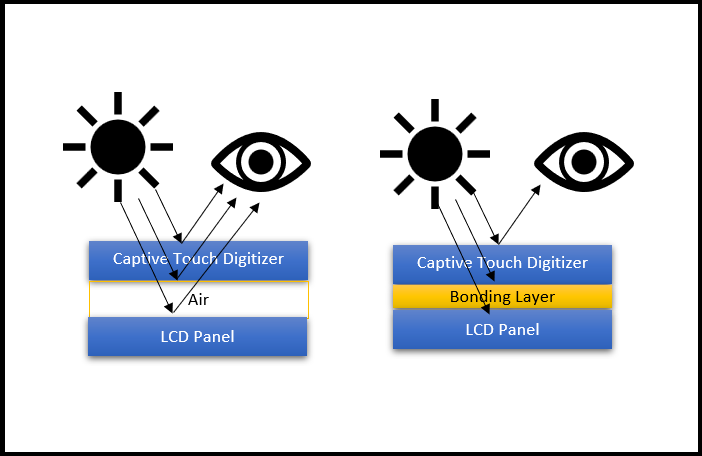
Touch screen technology has become an integral part of modern devices, from smartphones to industrial displays. One significant advancement in this field is optical bonding, a process that enhances touch monitors by eliminating the air gap between the glass and the display panel. This method offers several advantages over traditional standard monitors, making it the preferred choice for high-performance applications.
1. Improved Visibility and Clarity
Standard touch monitors have an air gap between the display and the protective glass, which can cause light refraction and glare, reducing screen clarity. Optical bonding removes this gap, minimizing internal reflections and improving contrast. The result is:
✅ Sharper images and better readability in both indoor and outdoor environments.
✅ Enhanced brightness efficiency, as more light reaches the user rather than being scattered inside the screen.
2. Reduced Glare and Reflection
With standard monitors, external light sources like sunlight or artificial lighting can create annoying reflections that make the display difficult to read. Optical bonding significantly reduces these reflections by:
✅ Eliminating the internal light refraction that occurs with an air gap.
✅ Providing better visibility under bright lighting conditions, making them ideal for outdoor use or bright workspaces.
3. Increased Durability and Resistance
In standard touch monitors, the air gap makes the screen more vulnerable to impact and pressure. Optical bonding strengthens the display by:
✅ Increasing shock and vibration resistance, making it suitable for industrial and rugged environments.
✅ Preventing dust and moisture accumulation inside the screen, which can cause screen degradation over time.
4. Enhanced Touch Sensitivity and Accuracy
Air gaps in standard monitors can lead to slower touch response and reduced accuracy, especially in high-precision applications. Optical bonding enhances touch functionality by:
✅ Providing a more immediate and accurate touch experience, as there’s no gap causing lag.
✅ Supporting multi-touch gestures more effectively, making them ideal for interactive applications.
5. No Condensation or Fogging
One major drawback of standard monitors is that temperature changes can cause condensation inside the air gap, leading to foggy or unclear displays. Optical bonding eliminates this issue, ensuring:
✅ Clear visibility in extreme temperatures, such as cold storage facilities or humid environments.
✅ No internal moisture buildup, preventing long-term damage to the screen.
6. Better Readability in Sunlight (Higher Contrast Ratio)
Optical bonding significantly improves contrast, which enhances readability in direct sunlight or high-ambient-light conditions. Unlike standard monitors, which lose contrast due to light diffusion, optically bonded screens:
✅ Maintain higher contrast levels in bright conditions.
✅ Provide a crisper display without the need for excessive backlight brightness.
7. Extended Lifespan
Since optical bonding prevents dust, moisture, and internal damage, these displays tend to last longer than standard touch monitors. This results in:
✅ Lower maintenance costs over time.
✅ Better long-term performance, making them a cost-effective choice for businesses.
Where Optical Bonding Is Most Beneficial
Given these advantages, optically bonded touch monitors are ideal for:

- Outdoor kiosks and digital signage (where sunlight readability is critical).
- Industrial environments (where dust, vibration, and durability are concerns).
- Medical displays (where accuracy and hygiene are essential).
- Marine and automotive applications (where condensation and rugged conditions are common).
Final Thoughts
Optical bonding offers a superior display experience compared to standard touch monitors by improving visibility, durability, and touch accuracy while eliminating issues like glare, condensation, and dust accumulation. Whether for industrial use, outdoor environments, or high-end applications, opting for an optically bonded screen ensures better performance and longevity in demanding conditions.